Natural Products & Plant Materials
Waking a Silent Gene Cluster Yields 'Biffamycin A,' a Minimal Glycopeptide Antibiotic
Waking an unexpressed gene cluster in an environmental actinomycete produced a new antibiotic that also works against vancomycin-resistant Staphylococcus aureus.

Researchers at the Astbury Centre for Structural Molecular Biology at the University of Leeds in the United Kingdom, the John Innes Centre and elsewhere discovered a new glycopeptide antibiotic (GPA), biffamycin A, and analysed its biosynthesis. Most clinical antibiotics have come from bacterial natural products, but industry has turned away from this resource because known compounds keep being rediscovered. Cheaper genome sequencing and bioinformatics tools are bringing renewed interest by revealing biosynthetic pathways that are not expressed in the laboratory.
A minimal four-amino-acid GPA with unprecedented building blocks
The researchers engineered the expression of a silent biosynthetic gene cluster carried by Streptomyces albidoflavus isolated from the environment, and isolated the compound guided by bioinformatic predictions. Biffamycin A is the smallest glycotetrapeptide among known GPAs, and it carries unprecedented building blocks: 5-chloro-4-methoxy tryptophan and 3-hydroxy-D-lysine attached to mannose. It showed antibacterial activity against mycobacteria and staphylococci, and it also acted on methicillin- and vancomycin-resistant Staphylococcus aureus.
It is significant that a new scaffold has been obtained within the GPA class, represented by vancomycin. However, these are in vitro antibacterial activity results, and efficacy in animal infection models and toxicity have not been confirmed.
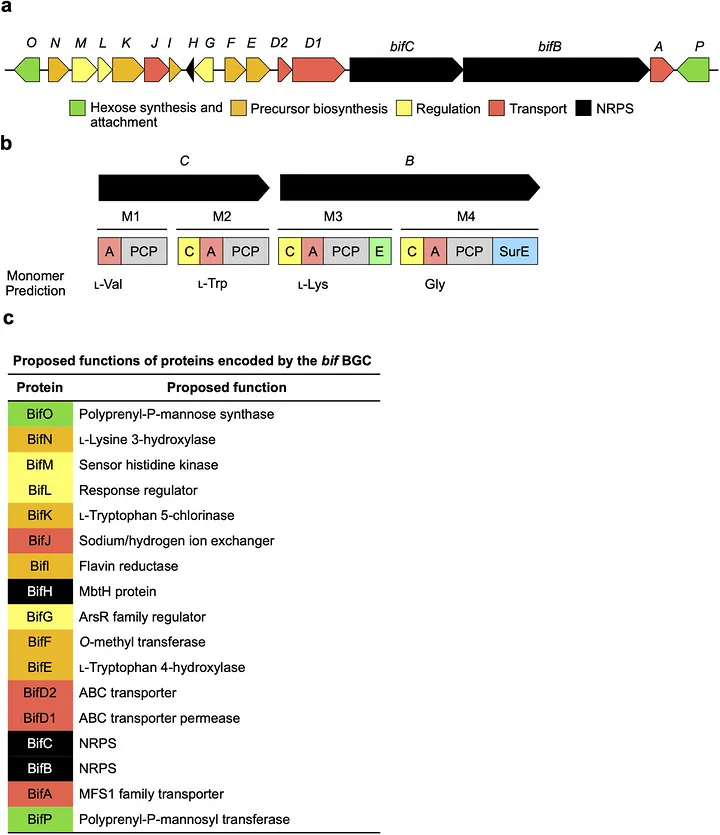
- Silent biosynthetic gene cluster of an environmental actinomycete expressed by engineering
- Smallest glycotetrapeptide among known GPAs, with 2 unprecedented building blocks
- Active against methicillin- and vancomycin-resistant Staphylococcus aureus and against mycobacteria
Limitations This is at the stage of in vitro antibacterial testing, and efficacy and safety in animals and people have not been verified.
Original research
- Brigham MW, et al. · University of Leeds. Discovery and Biosynthesis of the Novel Glycotetrapeptide Antibiotic Biffamycin A. Angewandte Chemie International Edition. DOI: 10.1002/anie.202511349
Copyright in the original research belongs to its publisher and authors.