Feature
SANBIDAM Premium: An Ingredient From an Ajou University Subsidiary With Loganin and 4-HBA as Marker Compounds
Partner Content · Provided by ONDAM BIO · Published
The Cornus extract complex uses loganin from Cornus fruit and 4-HBA from Ribes fasciculatum leaf as marker compounds. After seven years of research, it received MFDS individual approval.
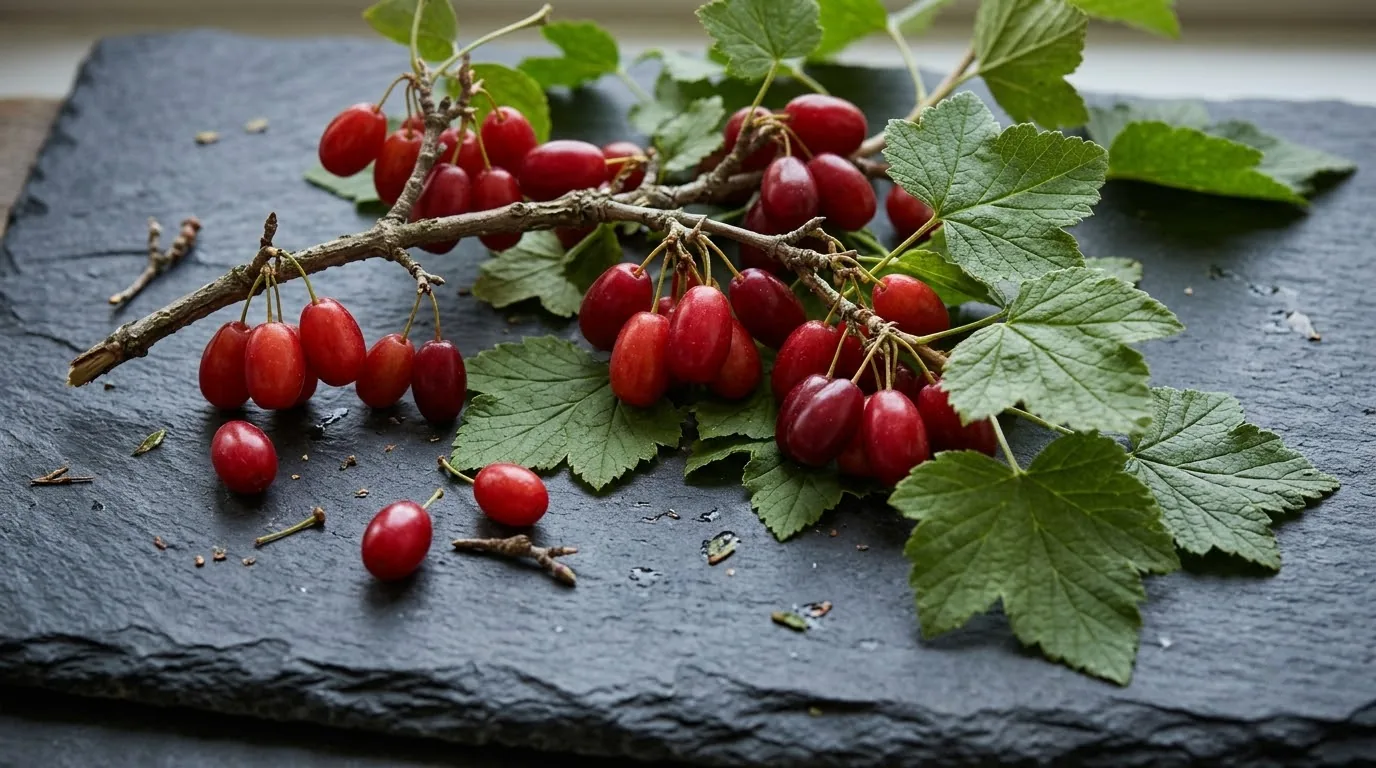
The name "loganin" appears often in health information. Loganin is an iridoid glycoside found in Cornus fruit (Cornus officinalis). It is the representative compound that distinguishes Cornus from other fruits and a marker compound for gauging its quality.
Loganin and 4-HBA in cell and mouse experiments
For loganin, there are cell and animal studies from researchers at Ajou University School of Medicine. In this study, published in the International Journal of Molecular Sciences, the researchers treated preadipocytes (3T3-L1) and adipose-derived stem cells with loganin. In cell experiments, they observed that expression fell for PPARγ and C/EBPα, which direct fat cell differentiation, along with the fat-synthesis enzyme FASN, the fat-storage protein PLIN2 and the fat-synthesis regulator SREBP1. Morroniside, another iridoid compound in Cornus, showed results in a similar direction in a cell and mouse study published in Biomedicine & Pharmacotherapy.
Another compound often mentioned alongside is 4-HBA (4-hydroxybenzoic acid). It is a phenolic acid found in many plants and is the marker compound of Ribes fasciculatum leaf, also called "chilhaemok." In a study that researchers at Kyung Hee University published in Phytomedicine, 4-HBA derived from black raspberry was given to white fat cells and to high-fat-diet mice. The energy sensor AMPK was activated, mitochondrial fission occurred through DRP1, and browning markers such as UCP1 and PRDM16 increased. When the researchers blocked AMPK or DRP1, these changes disappeared.
Is loganin alone enough?
No. The results above come from experiments that used a single compound in cells and mice. What was tested in people is an ingredient that combines the two raw materials. NINEB, a subsidiary of Ajou University's technology holding company, screened about 100 native Korean medicinal plants at the cell and animal stage, chose Cornus fruit and Ribes fasciculatum leaf, and after seven years of research developed the "Cornus extract complex," which blends the two raw materials at a 7 to 3 ratio. The ingredient was recognised as an MFDS individually approved functional ingredient (No. 2022-26), and it is controlled to the same specification in every production batch, using loganin and 4-HBA as marker compounds.
According to the process described in Korean Patent No. 10-2030495, only the seedless fruit of Cornus is used, and the raw material is extracted with ethanol at 80 °C for 4 hours, then concentrated and dried. The raw materials are domestically grown in Korea.
A 12-week human trial in overweight women
A 12-week human trial using randomised, double-blind, placebo-controlled methods was conducted in overweight women at Inje University Seoul Paik Hospital. A total of 147 women enrolled and 76 completed the trial. In the group taking 1,600 mg a day, body fat mass fell by 1.1 kg, compared with 0.5 kg in the placebo group (p=0.049). Body fat percentage fell by 0.76 percentage points in the treatment group and 0.01 percentage points in the placebo group, a significant difference (p=0.022). Both groups combined the intervention with diet control and exercise, and the results were published in the Journal of Clinical Medicine.
The health functional food that uses this ingredient is ONDAM BIO's "SANBIDAM Premium." ONDAM BIO brought in NINEB's ingredient and launched it as a product with four functional claims, adding resistant maltodextrin to the Cornus extract complex.
- Loganin (Cornus) and 4-HBA (Ribes fasciculatum leaf) are marker compounds used to keep ingredient quality consistent
- Single-compound results come from cell and mouse experiments; the human trial used the 7:3 combined ingredient at 1,600 mg
- Overweight women, 12 weeks: body fat mass 1.1 kg vs 0.5 kg, body fat percentage 0.76 vs 0.01 percentage points
Note SANBIDAM Premium functionality — Cornus extract complex: may help reduce body fat / Resistant maltodextrin: may help suppress the rise in blood glucose after meals, may help improve blood triglyceride levels, and may help support regular bowel movements. Health functional foods are not medicines for preventing or treating disease.
References
- Jeon H, et al.. Inhibitory Effects of Loganin on Adipogenesis In Vitro and In Vivo. International Journal of Molecular Sciences. DOI: 10.3390/ijms24054752
- Oh KI, et al.. Anti-adipogenic and anti-obesity effects of morroniside in vitro and in vivo. Biomedicine & Pharmacotherapy. DOI: 10.1016/j.biopha.2024.116762
- Kim SH, et al.. 4-hydroxybenzoic acid induces browning of white adipose tissue through the AMPK-DRP1 pathway in HFD-induced obese mice. Phytomedicine. DOI: 10.1016/j.phymed.2024.156353
- Park E, et al.. Efficacy and Safety of Combined Extracts of Cornus officinalis and Ribes fasciculatum for Body Fat Reduction in Overweight Women. Journal of Clinical Medicine. DOI: 10.3390/jcm9113629
This article is partner content written from materials provided by ONDAM BIO. It is labelled separately from research articles by the NBS editorial team.