Even After Weight Loss, Fat Cells 'Remember' Obesity: An Epigenetic Clue to Yo-Yo Dieting
In human and mouse adipose tissue, gene expression changes that arose during obesity remained after weight loss.
A study published in Nature reports that even after substantial weight loss, adipose tissue keeps traces of the obese state, which may be linked to the so-called 'yo-yo effect,' the tendency to regain weight easily. Researchers at ETH Zurich in Switzerland analysed adipose tissue from both humans and mice.
Cell-level expression analysis and epigenome comparison
The researchers examined gene expression in each cell of adipose tissue using single-nucleus RNA sequencing. In the adipose tissue of people who had lost considerable weight, and in that of obese mice that lost weight through diet, much of the transcriptional change that arose during obesity was retained. In mouse fat cells, epigenome changes written onto DNA and histones remained after weight loss and reduced cell function and the response to metabolic stimuli.
When mice with this 'obesity memory' were fed a high-fat diet again, they regained weight more quickly. The researchers said the remaining epigenetic marks could explain a large part of the fat cells' abnormal response to later high-fat feeding. It was also suggested that such memory may exist not only in fat cells but in other cell types.
Epigenetic evidence in people is still lacking
The study drew attention as a clue that explains, at the cellular level, why keeping weight off is hard. However, the direct link between the epigenetic changes and rapid weight regain was confirmed in mice, and the human data show only changes in gene expression. How long this memory lasts and whether it can be reversed have not yet been determined.
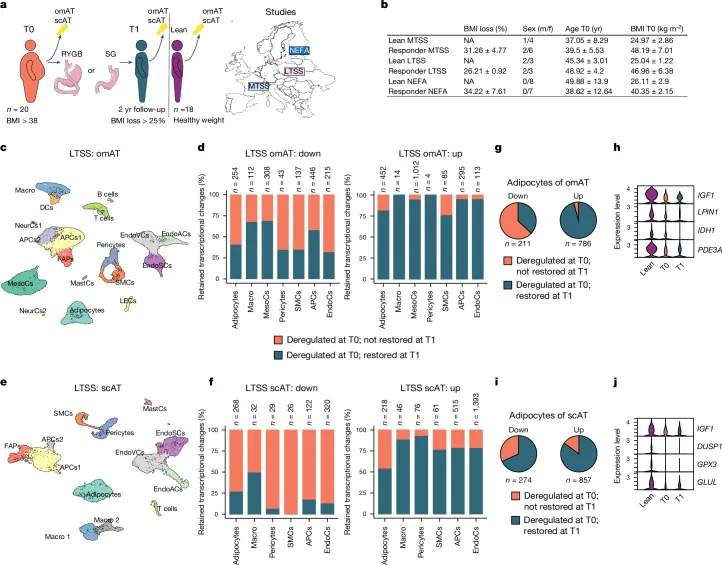
- In single-nucleus RNA sequencing, obesity-related transcriptional changes persisted after weight loss in both human and mouse adipose tissue
- Epigenome changes in mouse fat cells remained after weight loss and impaired function
- Mice with an 'obesity memory' regained weight faster when re-exposed to a high-fat diet
Limitations The causal link between epigenetic memory and weight regain was confirmed only in mice, and the human data are at the level of gene expression changes.
Original research
- Hinte LC, et al. · ETH Zurich. Adipose tissue retains an epigenetic memory of obesity after weight loss. Nature. DOI: 10.1038/s41586-024-08165-7
Copyright in the original research belongs to its publisher and authors.