Glyco-Engineered Anti-CD20 Antibody Cuts Relapse Risk 93% in Neuromyelitis Optica Phase 3 Trial
Obinutuzumab β, a type II anti-CD20 antibody that depletes B cells, greatly reduced 1-year relapses in patients with AQP4 antibody-positive neuromyelitis optica.

Neuromyelitis optica spectrum disorder (NMOSD) is an autoimmune disease in which autoantibodies attacking the aquaporin-4 (AQP4) protein cause repeated inflammation of the optic nerves and spinal cord. Vision loss or paralysis accumulates with each relapse. A team at the Chinese PLA General Hospital published phase 3 results for obinutuzumab β (MIL62), a glyco-engineered type II anti-CD20 monoclonal antibody, in Nature Medicine.
Placebo-controlled, double-blind phase 3 trial
Among AQP4 antibody-positive patients aged 18 to 70 with a disability score (EDSS) of 7.0 or lower, 91 were split 1:1 to receive intravenous obinutuzumab β 1000 mg or placebo. The primary endpoint was time to first relapse through week 52, as judged by an independent committee. Relapses occurred in 2 of 45 patients (4.4%) in the treatment group and 21 of 46 (45.7%) in the placebo group, for a hazard ratio (HR) of 0.069. That means the risk of relapse was about 93% lower.
Grade 3 or higher treatment-related adverse events were similar, at 6.7% in the treatment group and 6.5% in the placebo group.
Significance and limitations
B-cell depletion therapy has been used without large randomised evidence, and this trial adds placebo-controlled evidence. However, the trial was small, with 91 participants, included only Chinese patients and followed them for only 52 weeks. It did not compare directly with existing treatments such as rituximab, and the infection risk from long-term B-cell depletion also needs further follow-up.
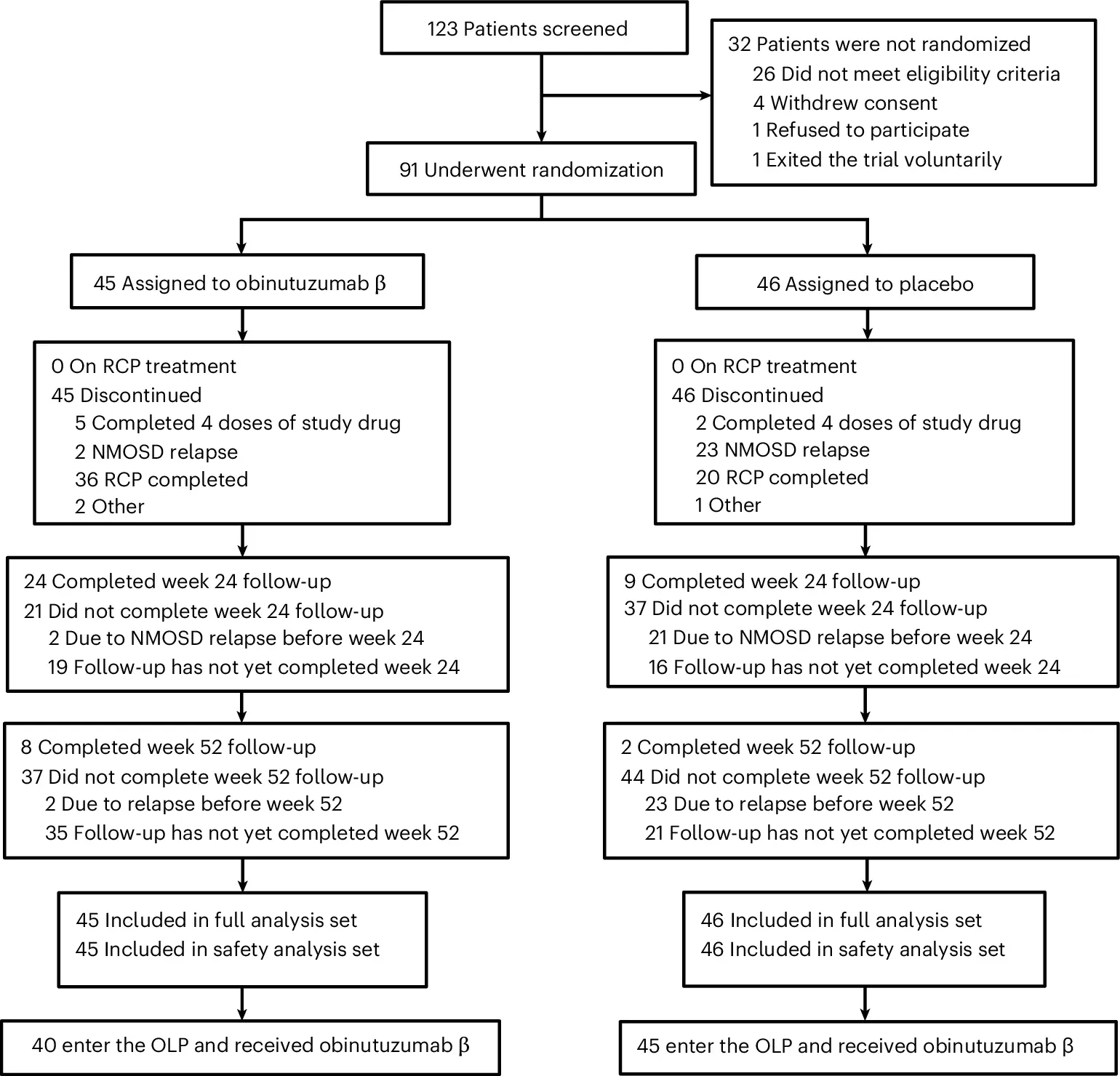
- Primary endpoint (first relapse within 52 weeks): 4.4% vs 45.7%, hazard ratio 0.069
- 91 patients with AQP4 antibody-positive NMOSD, placebo-controlled randomised double-blind phase 3 trial
- Grade 3 or higher treatment-related adverse events were similar: 6.7% vs 6.5%
Limitations Results come from 91 Chinese patients over 52 weeks, so the sample and follow-up are limited, and there was no direct comparison with existing B-cell therapies.
Original research
- Wu L, et al. · Chinese PLA General Hospital (First Medical Center). Obinutuzumab β for aquaporin-4-positive neuromyelitis optica spectrum disorder: a phase 3 randomized controlled trial. Nature Medicine. DOI: 10.1038/s41591-026-04583-4
Copyright in the original research belongs to its publisher and authors.