Single Dose of CAR-T Targeting Senescent Cells Improves Metabolism and Exercise Capacity in Old Mice
A single infusion of CAR-T cells targeting uPAR, a marker of senescent cells, durably improved glucose tolerance and exercise capacity in aged mice.

An immune cell therapy that removes senescent cells improved age-related metabolic abnormalities in mice over the long term with just a single dose. Researchers at Cold Spring Harbor Laboratory and Memorial Sloan Kettering Cancer Center in the United States reported the results in Nature Aging.
Removing Senescent Cells With uPAR-Targeted CAR-T
Senescent cells build up in the body with age and take part in the decline of tissue function. Senolytics, small-molecule drugs that clear senescent cells, have the limitation that they must be given repeatedly to keep working. The researchers used chimeric antigen receptor T cells (CAR T) engineered to recognise urokinase-type plasminogen activator receptor (uPAR), a protein associated with senescent cells.
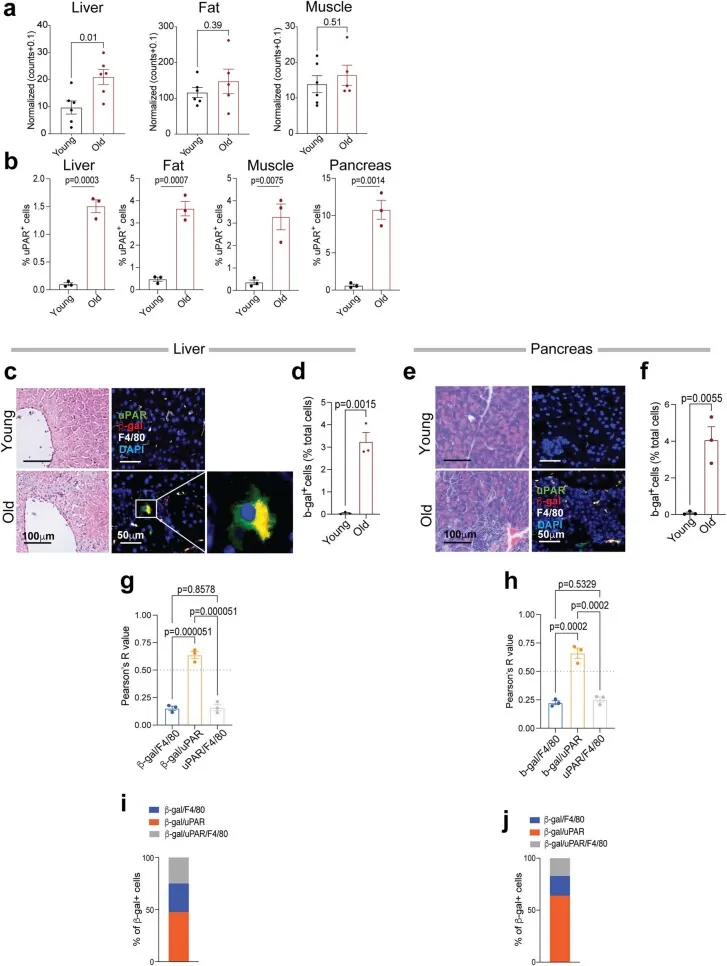
The researchers first confirmed that uPAR-positive senescent cells increase with age. When they then gave the CAR-T cells to naturally aged mice and to mice on a high-fat diet, exercise capacity improved and metabolic function such as glucose tolerance got better. A single dose produced a long-term therapeutic effect, and given before problems arose, it also had a preventive effect.
The result shows the possibility of a cell-therapy approach to ageing, but it comes from mouse experiments. CAR-T therapy is known to cause side effects such as cytokine release syndrome in people, so safety must be verified before it could be used for ageing-related diseases. Some of the authors hold related patents.
- Senescent cells removed with CAR-T cells targeting the ageing-related protein uPAR
- Confirmed that uPAR-positive senescent cells increase with age
- In aged mice and high-fat-diet mice, a single dose gave long-term improvement of exercise capacity and glucose tolerance, plus a preventive effect
Limitations These are mouse results, and given the known side effects of CAR-T therapy, safety must be verified before any use in people.
Original research
- Amor C, Fernández-Maestre I, et al. · Cold Spring Harbor Laboratory / Memorial Sloan Kettering Cancer Center. Prophylactic and long-lasting efficacy of senolytic CAR T cells against age-related metabolic dysfunction. Nature Aging. DOI: 10.1038/s43587-023-00560-5
Copyright in the original research belongs to its publisher and authors.