Black Raspberry Component 4-HBA Found to Drive 'Browning' of White Fat: Mouse Study
4-Hydroxybenzoic acid was found to convert white fat cells into beige fat cells through AMPK and DRP1.
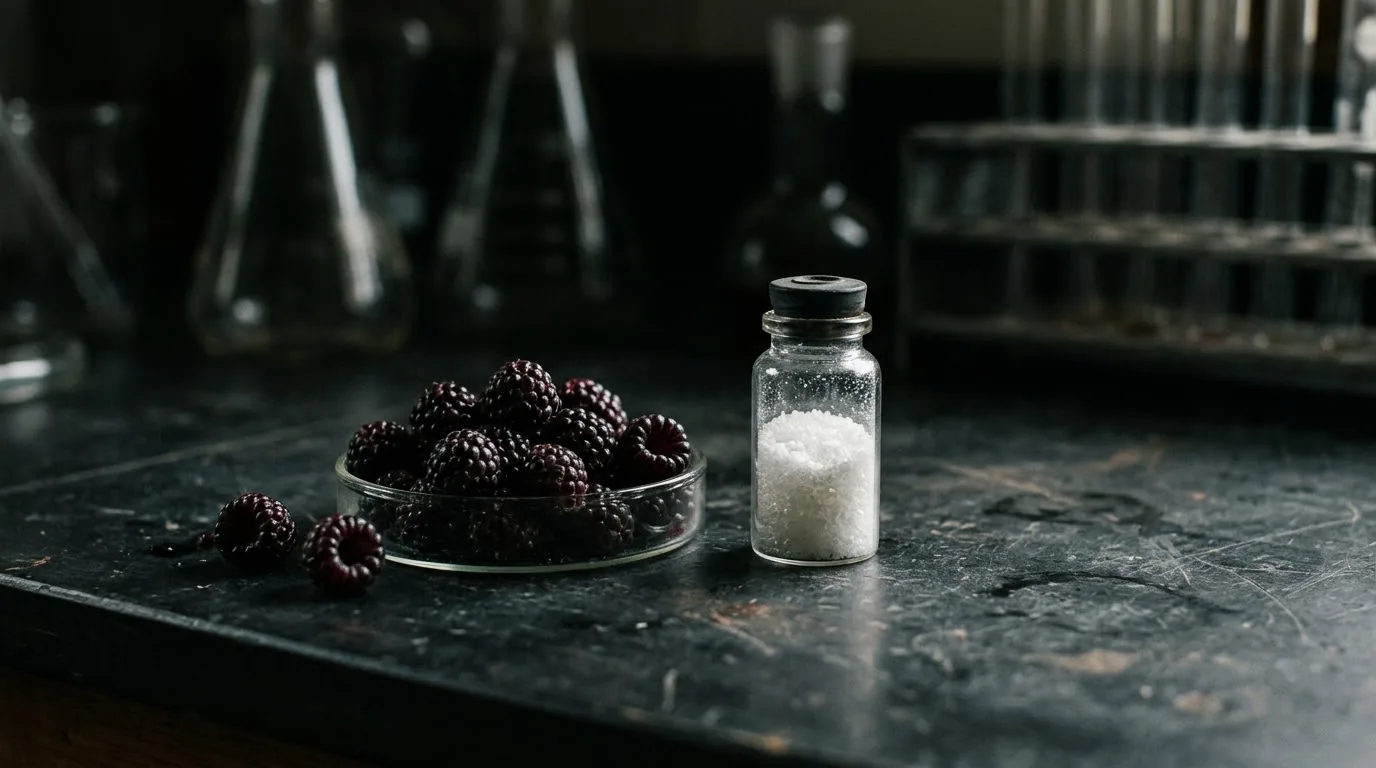
Body fat is divided into white fat, which stores energy, and brown fat, which burns energy as heat. The phenomenon in which white fat cells turn into beige fat cells that resemble brown fat is called browning, and a pathway has been uncovered by which 4-hydroxybenzoic acid (4-HBA), a main component of black raspberry, induces this process. Researchers at the College of Korean Medicine, Kyung Hee University, published the study in Phytomedicine.
Mitochondrial fission is the key
The researchers examined the action of 4-HBA in 3T3-L1 white fat cells, in male mice made obese with a high-fat diet, and in mice exposed to cold. Treatment with 4-HBA increased the heat-producing protein UCP1 and the browning markers PRDM16 and TBX1, and raised the activity of DRP1, which handles mitochondrial fission. The same changes appeared in the inguinal white adipose tissue of obese mice.
When mitochondrial fission was blocked with a DRP1 inhibitor (Mdivi-1), the browning disappeared, and the same happened when AMPK, the cell's energy sensor, was blocked with an inhibitor (Compound C). In other words, experiments supported the sequence in which 4-HBA activates AMPK, which leads to mitochondrial fission through DRP1 and results in browning.
A phenolic acid found in many plants
4-HBA is a phenolic acid distributed in many plants, and it is also used as a marker compound of the leaves of Ribes fasciculatum, a plant native to Korea. This study evaluated 4-HBA as a main component of black raspberry.
- 4-HBA treatment increased browning markers such as UCP1, PRDM16 and TBX1
- Blocking AMPK or DRP1 abolished the browning effect
- Confirmed in 3T3-L1 cells, high-fat-diet obese mice and cold-exposed mice
Limitations These are experiments in cells and male mice, and it has not been confirmed that the same pathway works in human adipose tissue.
Original research
- Kim SH, et al. · Kyung Hee University. 4-hydroxybenzoic acid induces browning of white adipose tissue through the AMPK-DRP1 pathway in HFD-induced obese mice. Phytomedicine. DOI: 10.1016/j.phymed.2024.156353
Copyright in the original research belongs to its publisher and authors.