Even People With “Normal” Blood Glucose: What Continuous Monitoring Revealed About Glucotypes
Fasting glucose and HbA1c are a single snapshot. Here is what continuous glucose monitoring research revealed about differences in post-meal glucose between people, and the debate over how to interpret it.
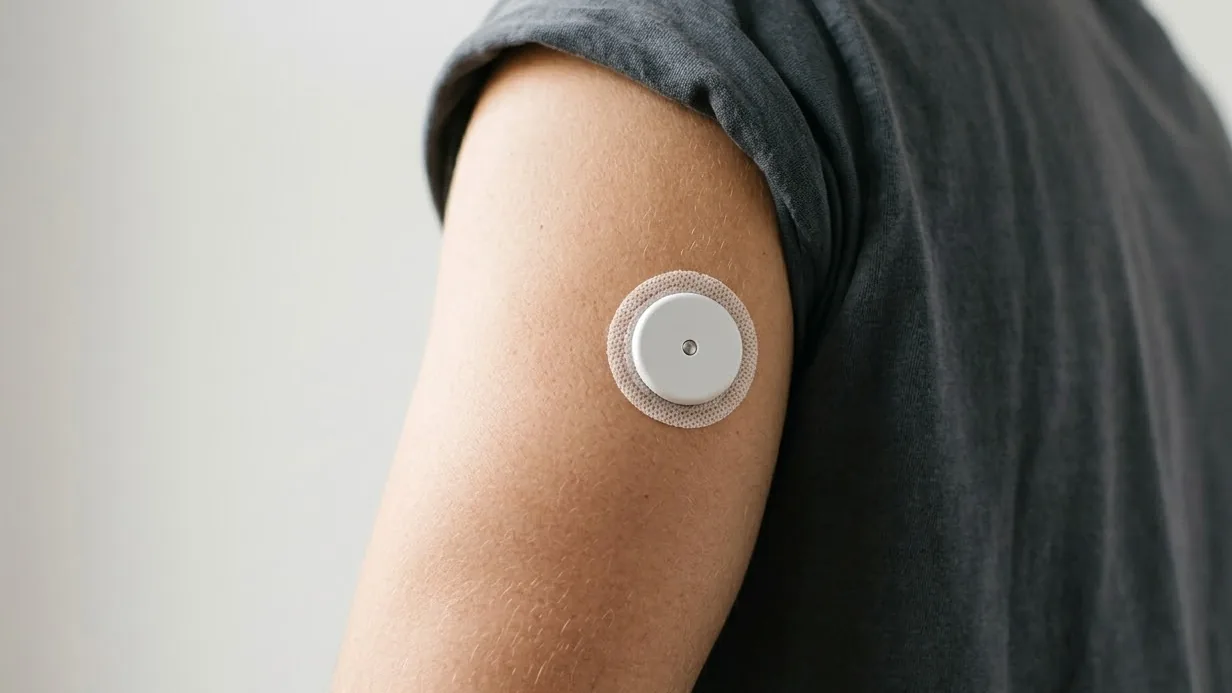
A blood glucose test is usually a number from a single point in time. Fasting glucose is one morning value, and HbA1c is an average over two to three months. Neither number captures how much blood glucose rises and falls over the course of a day.
A day seen through continuous glucose monitoring
Researchers at Stanford University in the United States recorded participants' blood glucose for several days with a continuous glucose monitor (CGM) worn on the skin. They also compared responses when participants ate the same standard meals. The researchers grouped the patterns in which blood glucose moves into several types and called them “glucotypes.” The results were published in PLoS Biology.
The most widely cited finding concerns people who were classified as normal on standard tests. On continuous monitoring, these people still spent about 15% of the day with blood glucose in the prediabetes range and about 2% of the day in the diabetes range. Even after eating the same food, the height and shape of each person's glucose curve varied widely. When insulin resistance and secretion were measured, the underlying physiology differed from person to person as well.
The debate over interpretation
The concept was critically examined in an official commentary in the same journal. Other researchers questioned whether glucotypes can be generalized to other populations, how they should be interpreted clinically, and how they differ from existing continuous glucose metrics. The original authors published a reply. For that reason, it is more accurate to read glucotypes not as a diagnostic standard but as an observation that “individual differences in glucose regulation are larger than expected.”
Why post-meal blood glucose matters
Even so, the message of this study is clear. A fasting number alone cannot tell you how blood glucose changes after a meal. This is why clinicians, in addition to fasting glucose, check blood glucose 2 hours after a glucose load with an oral glucose tolerance test.
Among the ways to flatten post-meal blood glucose, dietary fiber is one with a large body of evidence in humans. In particular, resistant maltodextrin, a soluble fiber with almost no viscosity, lowered the blood glucose response to carbohydrate foods in a dose-dependent manner in a meta-analysis of 37 randomized controlled trials.
References
- Hall H, et al.. Glucotypes reveal new patterns of glucose dysregulation. PLoS Biology. DOI: 10.1371/journal.pbio.2005143
- Hulman A, et al.. Towards precision medicine in diabetes? A critical review of glucotypes. PLoS Biology. DOI: 10.1371/journal.pbio.3000890
- Livesey G, Tagami H. Interventions to lower the glycemic response to carbohydrate foods with a low-viscosity fiber (resistant maltodextrin): meta-analysis of randomized controlled trials. The American Journal of Clinical Nutrition. DOI: 10.3945/ajcn.2008.26842