Adults Have Brown Fat Too: The PET-CT Analysis That Changed How Metabolism Is Studied
Brown fat, once thought to exist only in babies, was also found in adults. Here is what images from 1,972 people showed, and how it led to research on browning.
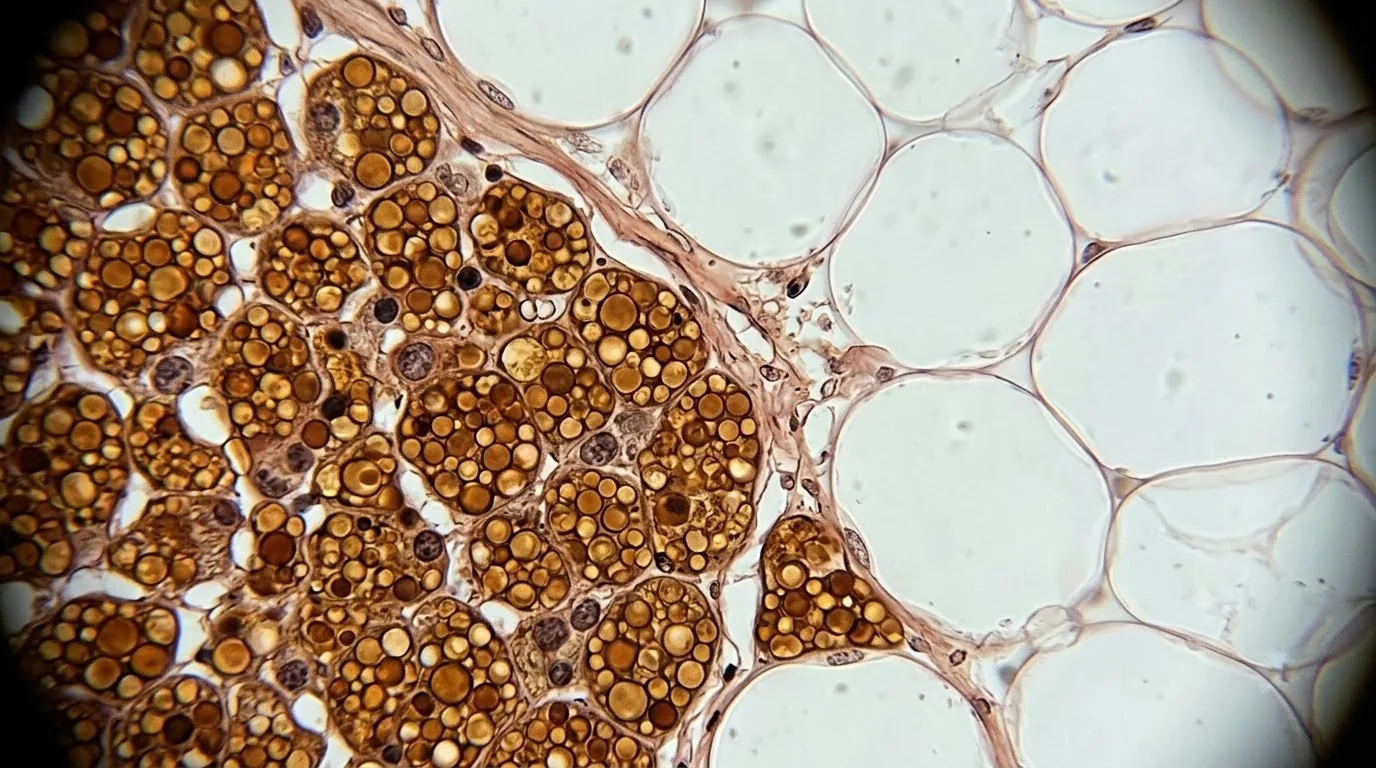
Brown adipose tissue is tissue that converts energy into heat using the mitochondrial protein UCP1. It is central to maintaining body temperature in rodents and newborns, but it had long been thought to have little physiological significance in adults. An analysis by researchers at the Joslin Diabetes Center at Harvard Medical School, published in The New England Journal of Medicine, changed that assumption.
Tissue found in diagnostic images
The researchers reviewed 3,640 ¹⁸F-FDG PET-CT scans (1,972 patients) that had been taken to diagnose other diseases. They defined as candidate brown fat any tissue at least 4 mm in diameter that had the density of fat on CT and high uptake of a glucose analog. This tissue was distributed from the front of the neck to the chest, and UCP1-positive multilocular adipocytes were confirmed in tissue from above the collarbone and neck obtained during surgery.
Who showed more of it?
- Positive readings were more than twice as common in women, at 7.5% (76 of 1,013), as in men, at 3.1% (30 of 959), and the amount and activity were also greater in women.
- Brown fat was less likely to be found in older people, when the outdoor temperature at the time of the scan was higher, and in people taking beta blockers.
- In older patients, the higher the body mass index, the less brown fat there was.
However, because this was an observational study that analyzed diagnostic images retrospectively, it cannot show the direction of causation between the amount of brown fat and obesity. PET-CT detects only active tissue, so it may also have underestimated how much brown fat people actually have.
Extending into browning research
Once the existence of brown fat in adults was confirmed, browning, in which cells within white fat turn into heat-producing beige adipocytes, became a major thread of metabolic research. Factors that induce browning are being explored, including cold, exercise, hormones, and even food compounds.
As an example from food compounds, a study reported in Phytomedicine found that 4-hydroxybenzoic acid (4-HBA) derived from black raspberry increased UCP1 and PRDM16 through the AMPK–DRP1 axis in cells and in mice fed a high-fat diet. It is a case in which research on the mechanisms of browning has reached the level of individual compounds.
References
- Cypess AM, et al.. Identification and importance of brown adipose tissue in adult humans. The New England Journal of Medicine. DOI: 10.1056/NEJMoa0810780
- Kim SH, et al.. 4-hydroxybenzoic acid induces browning of white adipose tissue through the AMPK-DRP1 pathway in HFD-induced obese mice. Phytomedicine. DOI: 10.1016/j.phymed.2024.156353