Brain Waste Clearance Actually Drops 30% During Sleep, Mouse Study Challenges Prevailing View
Mouse brains cleared less of an injected fluorescent tracer when asleep or anesthetized than when awake.

The glymphatic system hypothesis, that one important function of sleep is washing waste out of the brain, is widely known. A team led by Professors Nick Franks and William Wisden at the UK Dementia Research Institute (UK DRI) at Imperial College London published mouse experiment results in Nature Neuroscience that run counter to it.
Directly Measuring Movement and Clearance of a Fluorescent Tracer
The researchers implanted a tube in the caudate putamen of male mouse brains, injected a fluorescent dye, and compared how fast the substance spread and how much left the brain while the mice were awake, asleep and anesthetized. Movement of the substance within the brain did not depend on state. Clearance, however, was about 30% lower during sleep and about 50% lower under anesthesia than when awake.
The result directly overturns earlier reports that sleep and anesthesia promote brain clearance. The researchers said they do not yet know why clearance slows in these states. Other research groups have reported that slow constriction and relaxation of blood vessels during sleep helps clearance, so a debate over measurement methods continues.
Limits
This is an animal study of male mice only, and results could differ depending on molecule size or other clearance routes. It has not been confirmed that the same phenomenon occurs in people, and the result does not deny that sleep itself is important for health.
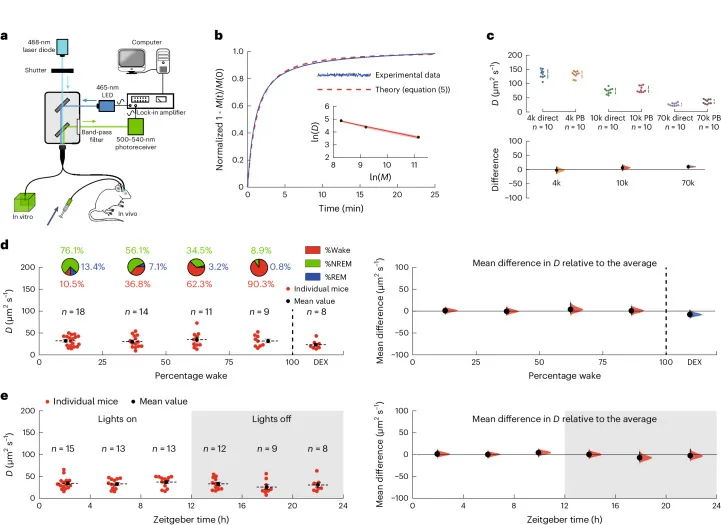
- A fluorescent dye was injected into male mouse brains to compare awake, asleep and anesthetized states
- Movement of substances within the brain did not depend on state; clearance fell about 30% during sleep and about 50% under anesthesia
- Contrary to the glymphatic hypothesis that sleep boosts brain clearance; a debate over measurement methods is ongoing
Limitations This is an animal study in (male) mice and cannot be applied directly to people; conclusions may differ depending on the measurement method and the type of molecule.
Original Research
- Miao A, et al. · Imperial College London (UK Dementia Research Institute). Brain clearance is reduced during sleep and anesthesia. Nature Neuroscience. DOI: 10.1038/s41593-024-01638-y
Copyright in the original research belongs to its publisher and authors.